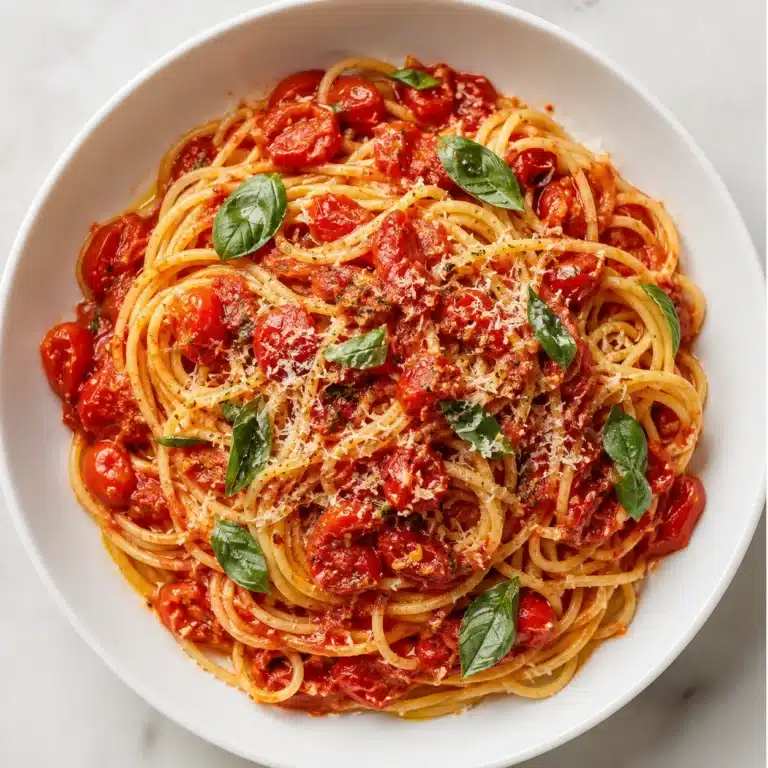
Ingredients
Spaghetti: 1 pound
Ripe Cherry Tomatoes or Grape Tomatoes: 2 pints (about 4 cups)
Garlic: 4-6 cloves (minced)
Olive Oil: 3 tablespoons
Fresh Basil: 1/2 cup (chopped)
Parmesan Cheese: 1/2 cup (freshly grated)
Vegetable Broth or Pasta Water: 1/2 cup
Red Pepper Flakes: 1/2 teaspoon (optional)
Salt: To taste (Kosher salt is recommended for cooking)
Black Pepper: To taste (Freshly ground pepper makes a difference)
Instructions
1. Step 1: Prepare Your Ingredients
2. First, wash your cherry or grape tomatoes thoroughly. Slice any larger tomatoes in half; smaller ones can stay whole. Mince your garlic cloves finely. Roughly chop your fresh basil. Grate your Parmesan cheese. Measure out your olive oil and vegetable broth or have your pasta water ready.
3. Step 2: Start the Sauce
4. Heat the olive oil in a large skillet or Dutch oven over medium heat. Once the oil shimmers, add the minced garlic and red pepper flakes (if using). Sauté for about 1 minute until fragrant, being careful not to burn the garlic. Burnt garlic tastes bitter, so watch it closely.
5. Step 3: Melt the Tomatoes
6. Next, add all the cherry or grape tomatoes to the skillet. Season generously with salt and black pepper. Stir to coat the tomatoes in the oil and garlic. Cover the skillet and reduce the heat to medium-low. Let the tomatoes cook for about 15-20 minutes, stirring occasionally. During this time, the tomatoes will burst and soften, releasing their juices and creating a beautiful, natural sauce. Gently press down on any stubborn tomatoes with the back of your spoon to help them break down. You want them to truly melt into a sauce, not just soften.
7. Step 4: Cook the Spaghetti
8. While the tomatoes are melting, bring a large pot of salted water to a rolling boil. Add the spaghetti and cook according to package directions until al dente. This usually takes 8-10 minutes. Before draining, reserve about 1 cup of the starchy pasta water. This liquid is gold for creating a silky, emulsified sauce.
9. Step 5: Combine Sauce and Pasta
10. Once the tomatoes have completely broken down into a luscious sauce, remove the skillet from the heat. Add the cooked and drained spaghetti directly into the tomato sauce. Pour in about 1/2 cup of the reserved pasta water or vegetable broth. Stir everything together vigorously. The starch from the pasta water will help create a wonderfully creamy and cohesive sauce that coats every strand. If the sauce seems too thick, add more pasta water, one tablespoon at a time, until you reach your desired consistency.
11. Step 6: Finish and Serve
12. Finally, stir in half of the freshly grated Parmesan cheese and most of the chopped fresh basil. Taste and adjust seasonings as needed. You might need a little more salt or pepper. Serve immediately, garnished with the remaining fresh basil and a generous sprinkle of additional Parmesan cheese. Enjoy this comforting and simple spaghetti recipe!
Notes
Pro Tips for Success:
– Choose the Right Tomatoes: Opt for ripe, sweet cherry or grape tomatoes for a naturally sweeter, more flavorful sauce.
– Do Not Rush the Melt: Allow tomatoes to cook down slowly over medium-low heat, covered, for 15-20 minutes. Gently pressing them helps.
– Salt Your Pasta Water Generously: Season pasta water like the sea (1-2 tablespoons per gallon) to flavor the pasta itself.
– Reserve That Pasta Water: This starchy liquid (about 1 cup) is crucial for emulsifying the sauce and achieving a silky, glossy texture.
– Finish in the Pan: Combine cooked spaghetti directly into the sauce pan to allow pasta to absorb flavors and starches to contribute to lusciousness.
– Fresh Herbs are Key: Do not skimp on fresh basil; stir it in at the very end to preserve its bright, aromatic flavor.
– Taste and Adjust: Always taste and adjust seasonings (salt, pepper, a pinch of sugar, or a squeeze of lemon juice) before serving.
Storage & Reheating Tips:
– Storing Leftovers: Allow to cool completely, then transfer to an airtight container. Refrigerate for up to 3-4 days or freeze for 2-3 months.
– Reheating from Refrigerator: Reheat on stovetop with a splash of water, broth, or olive oil over medium-low heat, stirring gently. Microwave in 1-minute intervals, covered loosely, adding liquid.
– Reheating from Freezer: Thaw overnight in the refrigerator, then reheat as above. Can reheat directly from frozen on stovetop with liquid, stirring frequently.
– Tips for Better Leftovers: Cook pasta slightly less al dente, keep extra sauce separate if possible, and add fresh basil when reheating.
FAQs:
– Canned tomatoes: While fresh are highly recommended, high-quality canned diced or fire-roasted tomatoes can be used in a pinch, though the unique burst and sweetness of fresh are special.
– Preventing sticking: Use a large pot with plenty of boiling, salted water. Stir pasta immediately and occasionally. Do not add oil to pasta water.
– Adding other vegetables: Absolutely! Sauté spinach, kale, zucchini, mushrooms, or bell peppers with garlic, or stir in roasted vegetables towards the end.
– Meal prepping: Yes, it reheats well. Cook pasta slightly less al dente if planning to reheat.
- Prep Time: 15 minutes
- Cook Time: 30-35 minutes
- Category: Main Course
- Method: Sautéing, Simmering, Boiling
- Cuisine: Italian-American
- Diet: Vegetarian
Nutrition
- Serving Size: 1/6 of recipe
- Calories: 367
- Sugar: 2.6
- Sodium: 143
- Fat: 10.4
- Saturated Fat: 2.5
- Unsaturated Fat: 7.9
- Carbohydrates: 61.5
- Fiber: 3.6
- Protein: 14.0
- Cholesterol: 5